New Paper published! Effect of Nanoparticles Addition on the Anaerobic Digestion Process: A Review
BRT-affiliated researcher Prof. Hassan El Bari recently co-authored a review article published in Waste and Biomass Valorization. The paper examines how nanoparticles can be incorporated into anaerobic digestion systems to improve process efficiency, biogas production, and overall stability.
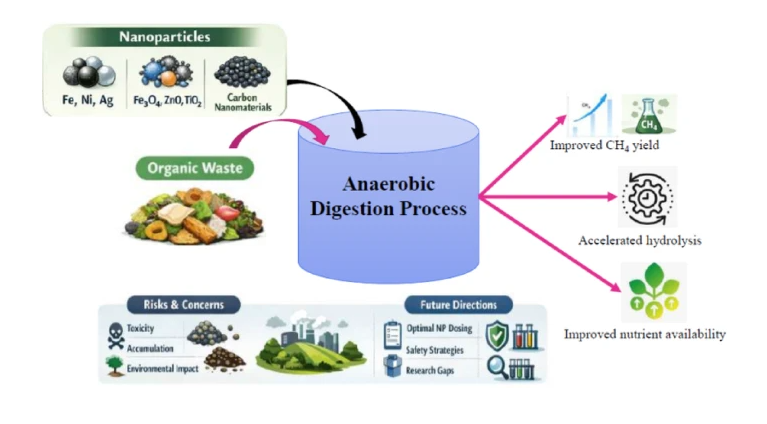
Anaerobic digestion is a biological process that breaks down organic matter in the absence of oxygen, producing biogas rich in methane. Although widely used for organic waste treatment and renewable energy production, its efficiency can be limited by slow hydrolysis, microbial inhibition, and process instability. The review explores nanoparticles as a potential strategy for addressing some of these limitations.
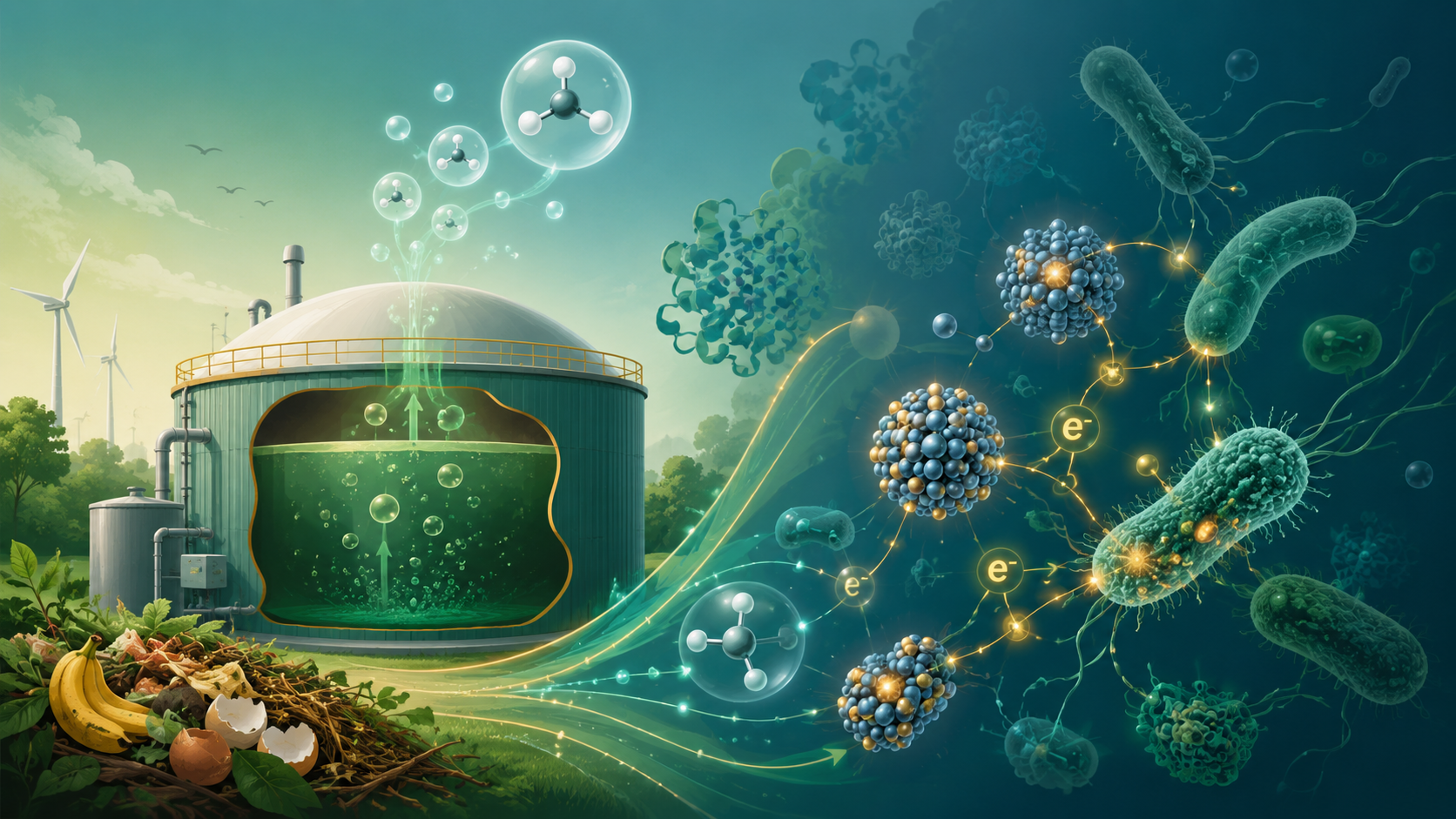
The authors examine several groups of nanoparticles, including metallic nanoparticles such as iron, nickel, and silver, metal oxides, and carbon-based nanomaterials. Across the studies reviewed, nanoparticles were found to influence anaerobic digestion through several mechanisms, including stimulating microbial activity, improving enzymatic activity, and facilitating electron transfer between microorganisms involved in the digestion process.
Importantly, the effectiveness of nanoparticle addition depends strongly on factors such as the type of material used, particle size, concentration, and dosing strategy. The review shows that these factors can affect both overall biogas production and methane yield. In some cases, nanoparticles can also shorten the time required for biogas production or improve the stability of the digestion process. However, higher concentrations do not necessarily result in better performance and can instead inhibit microbial activity.
The review therefore highlights the need to balance the potential benefits of nanoparticles with their associated risks. Toxicity at inappropriate concentrations, nanoparticle accumulation, environmental impacts, costs, and the fate of nanoparticles after digestion remain important considerations. These issues are particularly relevant when digestate produced through anaerobic digestion is subsequently used in agricultural or other environmental applications.
Although nanoparticle-assisted anaerobic digestion has demonstrated considerable potential, much of the existing research remains at laboratory scale. The authors emphasize the need for further research into long-term effects, optimal concentrations, interactions with microbial communities, digestate quality, and the economic feasibility of applying these technologies at larger scales. Future work should also investigate greener and bio-based nanoparticles, alongside life-cycle assessments and strategies for safe recovery and reuse.
Overall, the review provides an overview of both the opportunities and challenges associated with combining nanotechnology and anaerobic digestion. By identifying the mechanisms through which nanoparticles can improve microbial processes and methane production, while also highlighting the environmental and technical questions that remain, the study contributes to ongoing efforts to develop safer, more efficient, and scalable approaches to sustainable biogas production.
Citation: Habchi S, Kaydouh MN, El Hasnaoui M, Karouach F, El Hassan N, El Bari H (2026). Effect of Nanoparticles Addition on the Anaerobic Digestion Process: A Review. Waste and Biomass Valorization. https://doi.org/10.1007/s12649-026-03742-5
For more details on BRT activities, subscribe to our newsletter or follow us on social media for regular updates and highlights!