BRT Wins First Place at the Anthropocene Case Competition 2026
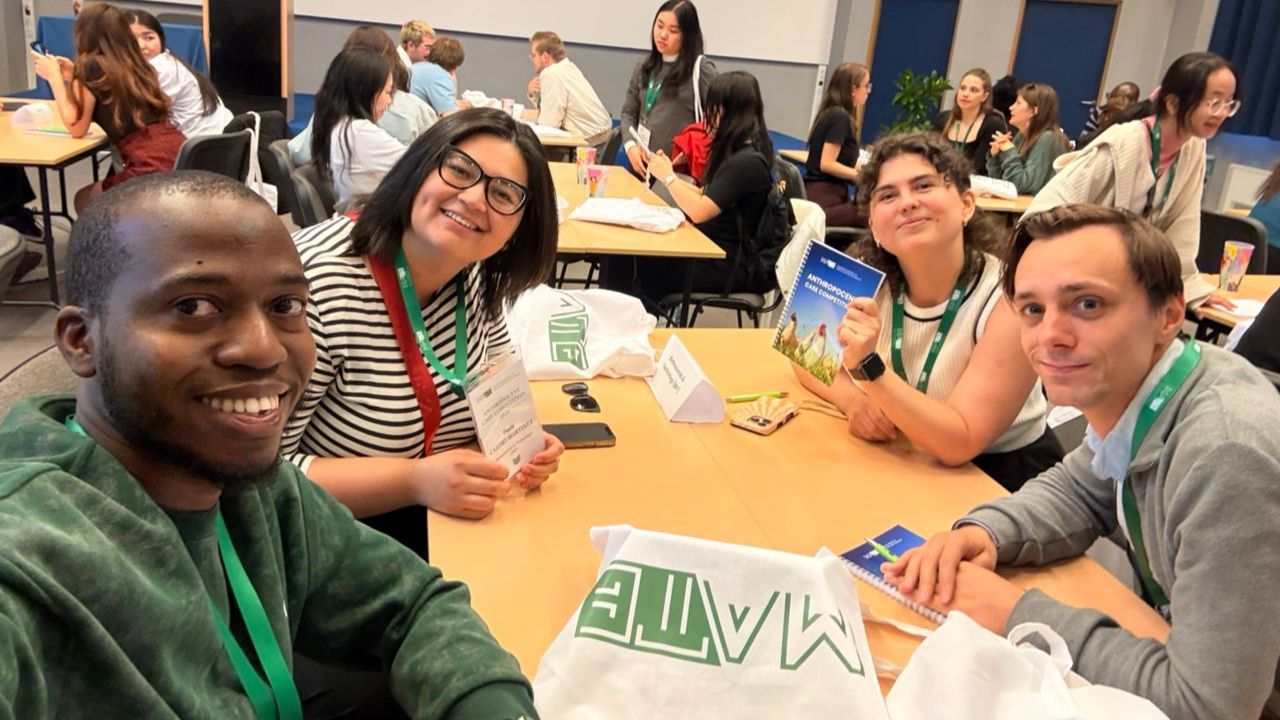
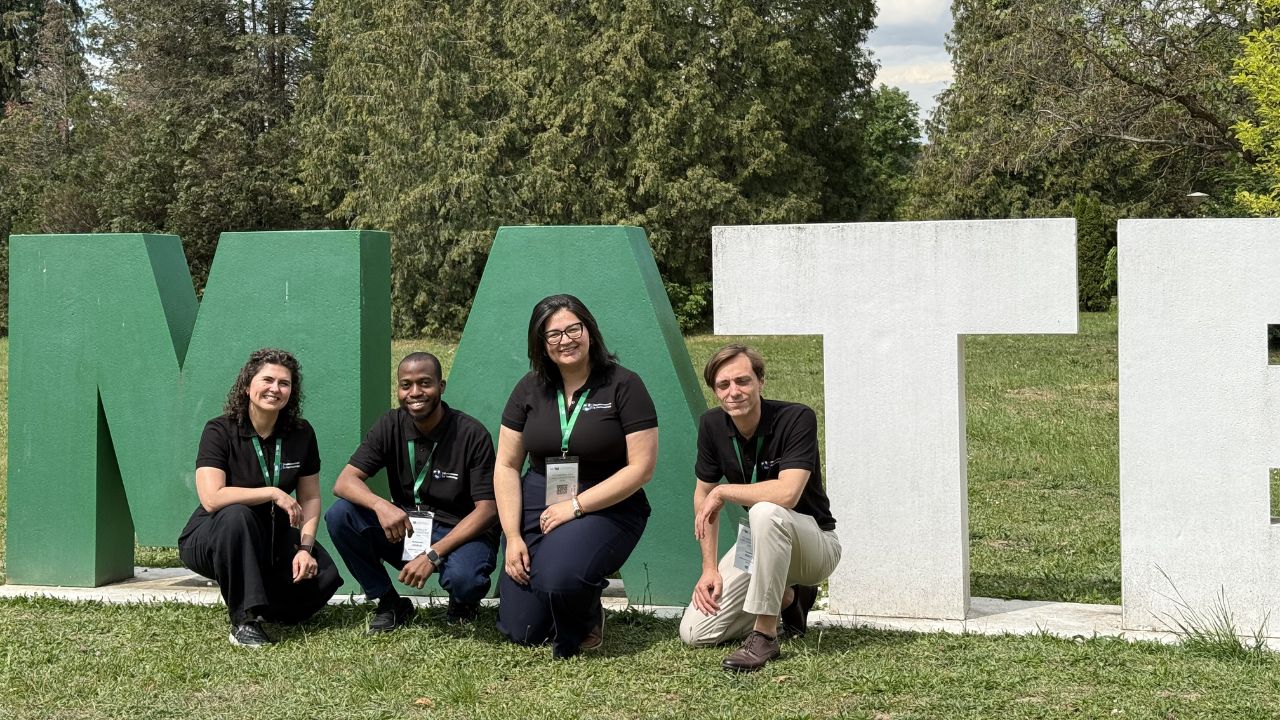
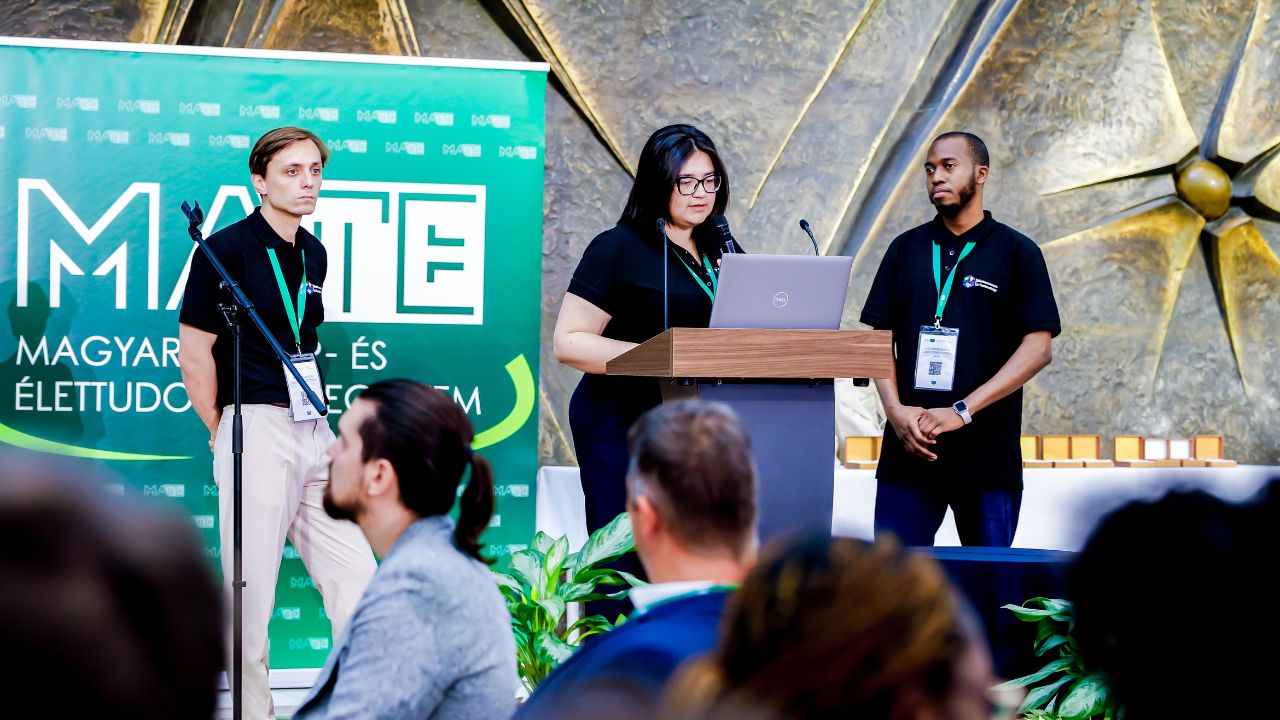
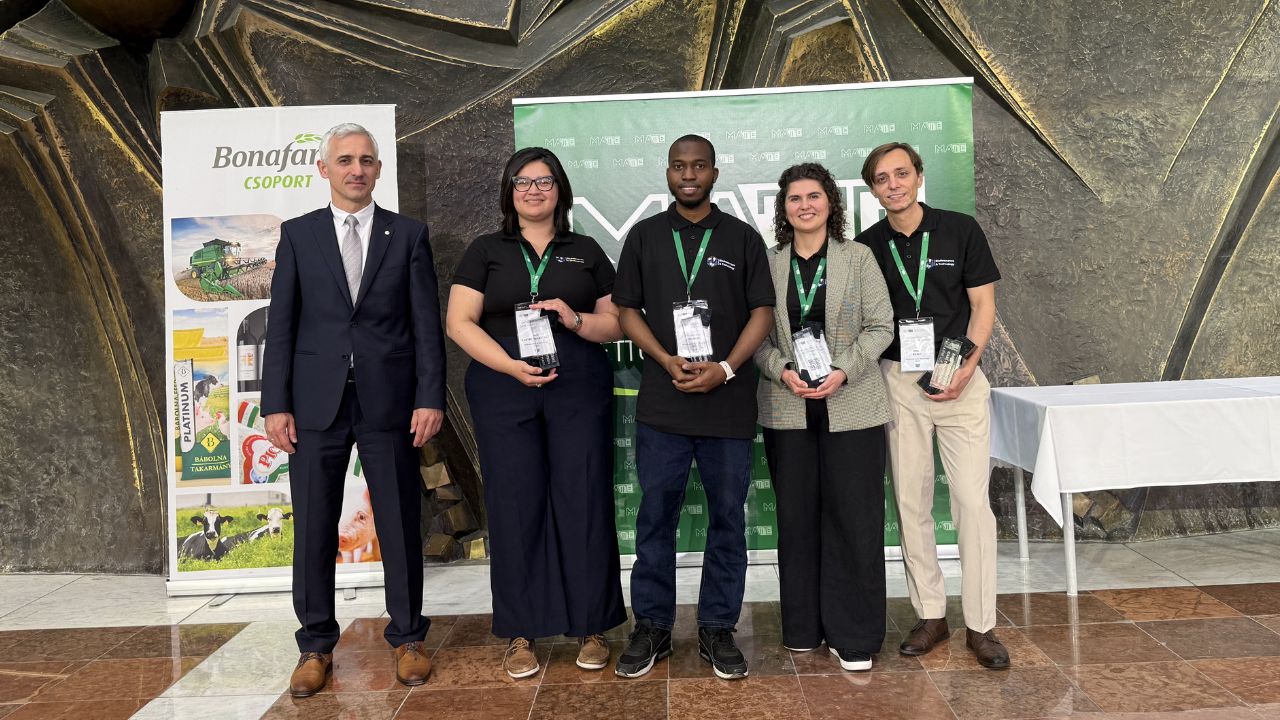
BRT participated in the Anthropocene Case Competition 2026, an international student challenge organised by the Hungarian University of Agriculture and Life Sciences (MATE) in cooperation with Bonafarm Csoport. The team brought together mentor and Assistant Professor Dr. Viktoriia Chubur, PhD students Antoine Bercy and AbdulAzeez Shobajo, and Master’s student Paula A. Castro M. This year’s case focused on developing innovative and practical solutions for the utilisation of by-products generated within Bonafarm Csoport’s poultry business, challenging participants to combine sustainability, circular economy thinking, and applied innovation in response to real agrifood industry needs. In this first-hand account, the BRT team shares their journey through the competition, from the first case brief to the final pitch and their first-place win.
Enjoy reading!
When we first saw the call for the Anthropocene Case Competition 2026, the brief seemed straightforward: solve a real sustainability challenge in the agrifood sector. What we didn't know was that the next four months would push us through four elimination rounds, force us to become experts in everything from poultry blood coagulation to EU animal by-product regulation, and ultimately bring us face-to-face with a 48-hour live case challenge in Gödöllő, Hungary.
This is the story of how we got there.
The Anthropocene Case Competition wanted wanted implementable business concepts for real agrifood challenges. We had to think like consultants, not just researchers. The first round of the competition opened with approximately 80 teams from 20+ countries. The first round was a written submission: analyze Bonafarm's operations and propose a sustainable innovation. The case brief introduced us to Bonafarm Group's full vertical integration; crop production on 31,000+ hectares, 650,000+ pigs annually, dairy herds, and the PICK and Herz meat brands sold across 50+ countries.
Our Round 1 submission focused on biogas potential from Bonafarm's poultry and livestock operations. We analyzed the by-product streams from Hungerit, Bonafarm's poultry division, which was in the process of building a €97.6 million greenfield slaughtering facility in Szentes. The facility is set to double capacity from 22 million to 44 million broilers per year.
We proposed a two phase poulty by-product meal and circular biogas model that could convert farm-level manure and slaughterhouse by-products into energy, digestate fertilizer, and reduced emissions. The concept was broad, but it showed we understood the system-level opportunity.
It was enough to advance.
Round 2 sharpened the focus to farm-level manure utilization. We built a Hub-and-Spoke regional biogas model. We proposed AD hubs serving geographic clusters of Hungerit's 20+ farms, with full CAPEX estimates (~€17.5M), biogas yield calculations, and payback analysis. Out of roughly 40 teams, 12 advanced, including teams from KNUST (Ghana), SGGW Warsaw, and universities across Europe, Asia and Africa.
We were one of them.
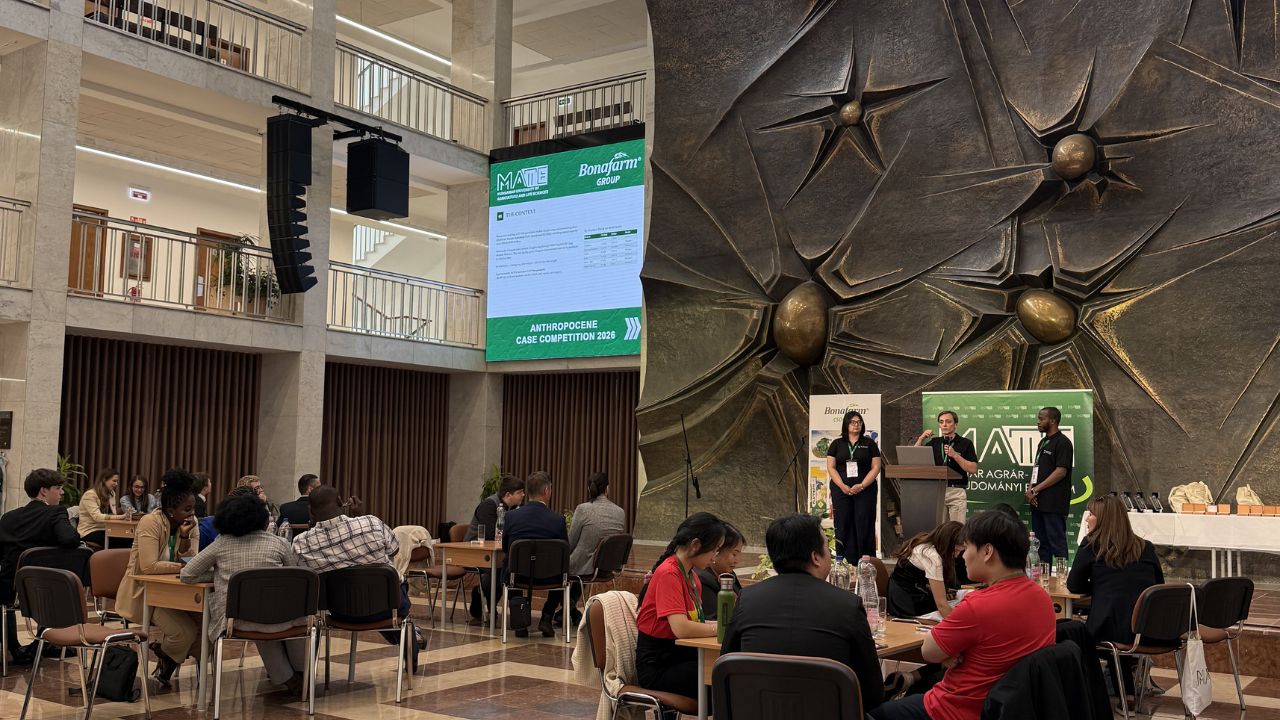
The Grand Final took place 13–15 May 2026 at MATE's campus in Gödöllő, Hungary. 12 final teams received a new case brief on arrival to build a complete business proposal in 48 hours and pitch to Bonafarm executives and industry experts.
The Round 3 brief focused on slaughterhouse by-products from Hungerit's new Szentes facility. At 44M birds × 2.64 kg average live weight = 116,160 tonnes/yr, approximately 28,000 tonnes become CAT3 by-products: blood, feathers, viscera, heads, feet, necks, organs. The question: what do you do with all of it?
Our core insight came from the chemistry. You cannot process blood, feathers, and offal the same way. Blood needs coagulation, feathers need hydrolysis, offal needs rendering plus fat separation. This led to our strategy: three independent processing streams, one integrated system.
What Set Us Apart?
We exploited the EU 2021 PAP regulation. Regulation 2021/1372 lifted the 20-year ban on poultry PAP in pig feed. Bonafarm owns pig operations (MCS Vágóhíd, 1M pigs/yr) and feed mills (Bonafarm-Bábolna Takarmány). This means they can produce poultry protein at Szentes, feed it to their own pigs, and close the nutrient loop. This is a circular route that was illegal until 2021 and that no external renderer can replicate.
We benchmarked against the real competitor. ATEV Zrt. (est. 1949, four rendering plants, EFPRA member) currently collects Hungerit's by-products. Every tonne sent to ATEV is margin handed to a competitor. Our comparison matrix showed that Bonafarm is the only player combining processing, feed production, and livestock operations.
We showed the science behind stream separation. Not a generic "build a rendering plant" proposal. We referenced Feedipedia, Mavitec equipment specs, and peer-reviewed literature to demonstrate why blood (82% water, coagulation chemistry), feathers (keratin hydrolysis), and offal (rendering + fat separation) each demand their own processing line.
Then we did something we knew no one else would do. We contacted manufacturers and suppliers directly to obtain current market insights and realistic price estimates for our proposed innovation. We received many non-responses, but one company eventually engaged us and provided a detailed technical and cost breakdown. Based on that consultation, we refined our solution into a more practical single-chain poultry by-product meal system: three dedicated pre-processing lines for blood, feathers, and offal, followed by one downstream processing chain that combines the treated outputs into a high-protein PBM product, reducing our total CAPEX through shared Infrastructure. This input transformed our proposal from a theoretical concept into a real-time consultation-backed solution, strengthening its credibility and helping convince the judges that it was commercially and technically viable.
What We Learned
Speed of structured thinking beats depth. In 48 hours, you cannot pursue dead ends. We spent the first two hours building a decision framework before touching a single number. Deciding what NOT to include saved us.
Numbers must be defensible. The judges didn't want "€5 million revenue." They wanted: what's the price per tonne? What source? What EU regulation permits it? We cited Fastmarkets, Eurostat, EFPRA research, and specific regulation numbers for every assumption. The best proposals fit the company. A generic rendering proposal could come from a textbook. What made ours specific was the Bonafarm circular integration.
And yes! Sleep is overrated. Coffee is essential. There were moments at 3 AM when the thermal energy calculations didn't balance, the fat mass figures were off by a factor of three, and the slide deck had to be rebuilt from scratch. Those moments tested more than our technical skills.
After 48 hours of building, calculating, debating, and refining and a final pitching, we took first place overall in the Anthropocene Case Competition 2026. Out of 80 teams from 20+ countries, through four rounds of elimination, a team from Prague stood on top. We came to Gödöllő as researchers. We left as winners, with the proof that lab skills are sacrosanct to boardroom logic.
The competition gave us more than a final-round experience. The EU produces 18 million tonnes of animal by-products annually, but the 2021 PAP derogation has barely been adopted. Only a handful of feed mills in the Netherlands, Germany, and Finland have started trialing PAP in pig diets. The rest of Europe is catching up.
We believe the three-stream integrated model we developed is replicable across Central and Eastern Europe, wherever large-scale poultry processors are sitting on thousands of tonnes of undervalued by-products and have the vertical integration to close the circular protein valorisation loop.
For more details on BRT activities, subscribe to our newsletter or follow us on social media for regular updates and highlights!