

New Paper Published! The effect of pretreatment on VFA production from tofu and tempeh wastewater through anaerobic digestion batch
Researchers from the Faculty of Tropical Agrisciences (FTZ) at the Czech University of Life Sciences Prague (CZU), including BRT Postdctoral Researcher Dr. Lydia Mawar Ningsih and Director Assoc. Prof. Dr. Hynek Roubík, recently published an article in Biofuels, Bioproducts and Biorefining (Biofpr).
The growing popularity of tofu and tempeh around the world has increased the demand for soybean-based food production. However, behind these nutritious foods lies a major environmental challenge: the generation of large amounts of nutrient-rich wastewater. Instead of viewing this wastewater as a disposal problem, this study explored its potential as a valuable resource for producing volatile fatty acids (VFAs) through anaerobic digestion. Tofu and tempeh production generates substantial volumes of wastewater during soaking, washing, boiling, and processing steps. This wastewater contains high concentrations of organic compounds, proteins, carbohydrates, and nutrients that can contribute to environmental pollution if discharged untreated. At the same time, these compounds provide an excellent substrate for microbial conversion into value-added biochemicals. Among these biochemicals, VFAs, especially acetic acid, are attracting increasing attention because they can be used as building blocks for bioplastics, biofuels, green chemicals, and other sustainable bioproducts.
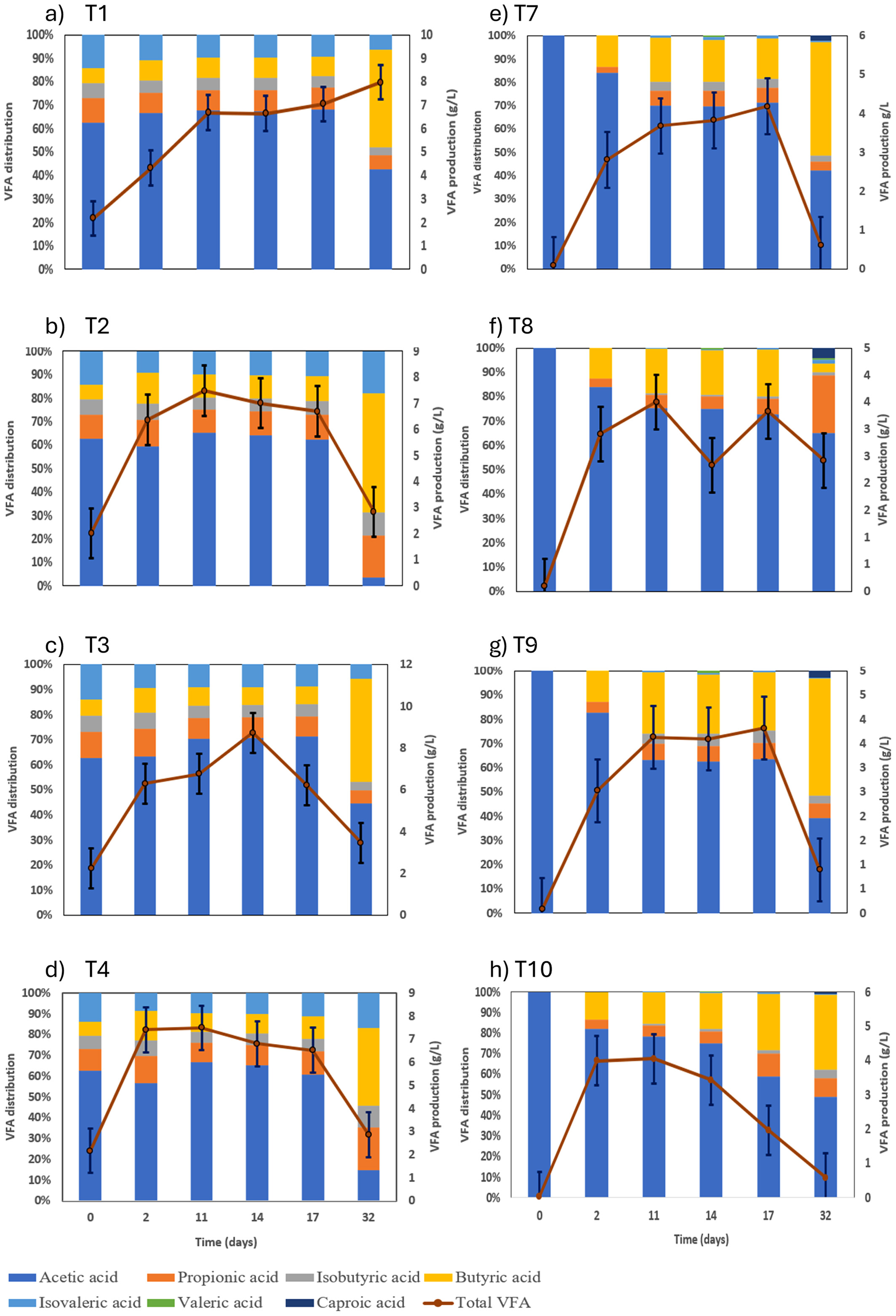
This study focused on enhancing VFA production from tofu and tempeh wastewater using batch anaerobic digestion under different pretreatment conditions. Several strategies were tested, including pH adjustment and heat shock treatment of inoculum, mesophilic and thermophilic temperatures, and combinations of these approaches. The aim was to identify the most effective conditions for maximizing VFA accumulation while suppressing methane production. This research highlights how agro-industrial wastewater can be transformed into valuable bio-based chemicals instead of becoming an environmental burden. The findings support the transition toward a circular bioeconomy system, waste valorization, and sustainable industrial biotechnology, and resource recovery approaches.
The results demonstrated that pretreatment significantly influenced VFA production and composition. The highest total VFA production form tempeh wastewater reached; 10.08 g/L under thermopilic conditions with heat shock pretreatment and pH adjustment; meanwhile, tofu wastewater achieved 9.79 g/L total VFA under similar thermophilic conditions. However, acetic acid was the dominant VFA in nearly all treatments, with concentrations reaching 77.32% in tempeh wastewater, and up to 92.40% in tofu wastewater. Interestingly, higher VFA production was associated with lower methane generation. This is important because the process was intentionally directed toward acid production rather than biogas production.
VFAs are increasingly recognized as strategic platform chemicals for future biorefineries. Further optimization of fermentation conditions, microbial communities, and reactor systems may improve yields and industrial scalability. This research opens opportunities for integrating food industry waste management with sustainable biochemical production, particularly in countries with large soybean-processing industries. Through innovative biotechnology approaches, waste streams from tofu and tempeh production may become an important resource for producing renewable chemicals and supporting global sustainability goals.
Citation: Ningsih, L. M., Taherzadeh, M. J., Wainaina, S., & Roubík, H. (2026). The effect of pretreatment on VFA production from tofu and tempeh wastewater through anaerobic digestion batch. Biofuels, Bioproducts and Biorefining. https://doi.org/10.1002/bbb.70163
For more details on BRT activities, subscribe to our newsletter or follow us on social media for regular updates and highlights!