
Biogas and the SDGs: Synergies, Trade-offs, and Pathways to Sustainable Impact
BRT PhD student and junior researcher Phiona Jackline Mukisa recently wrote a think piece about the role of biogas in the future of clean energy. Enjoy reading!
Biogas and the SDGs. Where Do the Connections Begin and End?
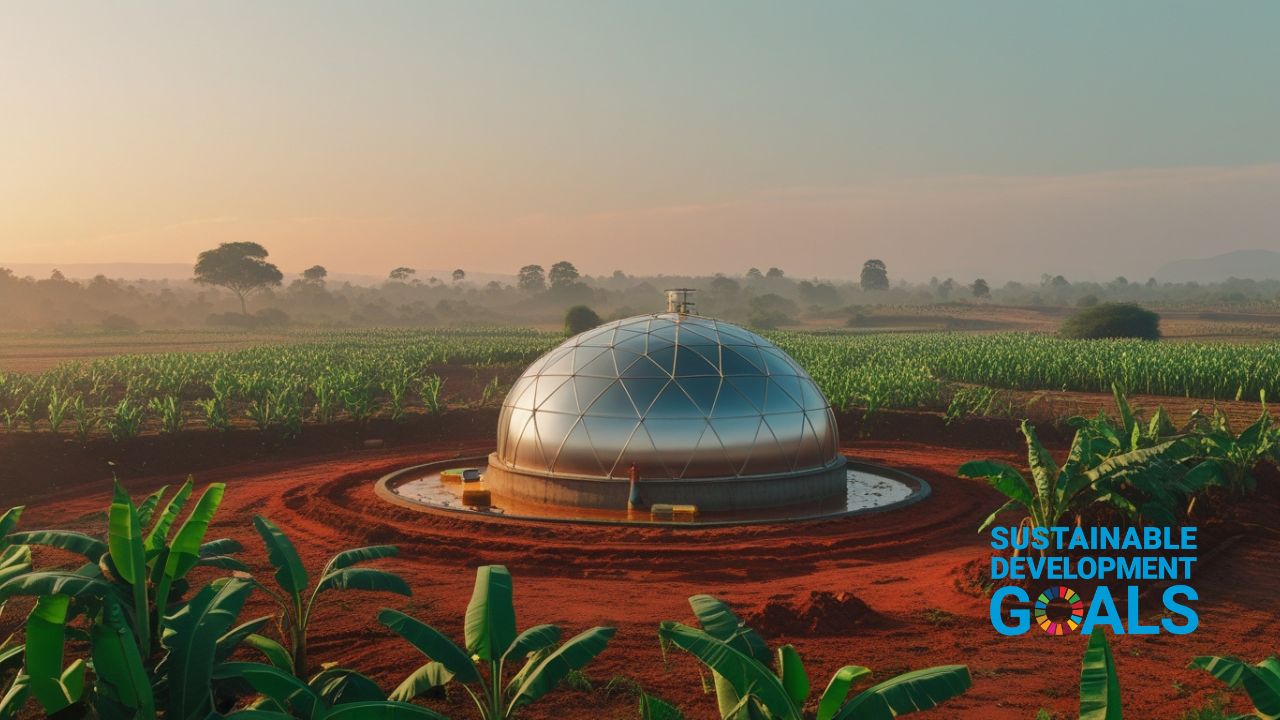
Biogas is more than clean energy; it’s a quiet revolution. In rural Uganda, small-scale digesters turn waste into fuel, but their impact stretches far beyond the kitchen. They reshape health, agriculture, gender equality, climate resilience, and income generation, showing how one simple technology can spark progress across multiple Sustainable Development Goals (SDGs).
Biogas: A Multi-Sectoral SDG Enabler
At its core, biogas advances SDG 7 (Clean Energy) by providing affordable, decentralized fuel. This reduces reliance on firewood, cuts emissions, and improves indoor air quality, contributing to SDG 3 (Health). It also supports SDG 6 (Sanitation) through better waste management, while methane capture strengthens SDG 13 (Climate Action).
The benefits extend further. The slurry by-product enriches soils and reduces fertilizer costs, reinforcing SDG 2 (Zero Hunger) and SDG 12 (Responsible Consumption and Production) by strengthening food systems and promoting circular resource use. Time saved from fuel collection empowers women and girls (SDG 5: Gender Equality) and frees hours for education (SDG 4) and income generation (SDG 8).
Interlinkage Analysis: Positive, Neutral, and Trade-offs
Biogas systems intersect with the SDGs in complex ways. While many impacts are positive, others are context-dependent and reveal trade-offs that must be carefully managed. My research in Uganda highlights three categories:
- Positive impacts include cleaner kitchens, reduced smoke exposure, and healthier living environments. Nutrient-rich slurry boosts soil fertility and crop yields, while biogas adoption fosters greater gender participation in household decisions, strengthening women’s roles in family livelihoods.
- Neutral or context-dependent outcomes show the complexity of energy transitions. Biogas often complements rather than replaces wood and charcoal, limiting full climate and health gains. Gender equity improves where ownership is shared, but technical and financial decisions remain male-led, meaning progress is gradual.
- Trade-offs and risks also emerge in the adoption process. High upfront costs can exclude poorer households, challenging progress toward SDG 1 (No Poverty) and SDG 10 (Reduced Inequalities). Poorly structured loans and subsides may increase financial stress, discouraging adoption or undermining sustainability. If slurry management falls mainly on women, time savings from reduced fuel collection may be offset by added labour. These challenges highlight the need for financing models and program designs that are inclusive and gender-sensitive.
Field Insights from Uganda:
These dynamics become clearer when looking at household experiences on the ground.
Fuel stacking remains common. Biogas is a “weekday workhorse,” but households often supplement with wood, charcoal, or other fuels during peak cooking. This reflects both cultural preferences and the practical need to balance energy sources.
Health and environmental benefits are widely reported: cleaner kitchens and reduced smoke exposure improve comfort and well-being, while shorter meal preparation times reinforce pro-environmental attitudes.
Financing and gender dynamics are critical. Most households rely on savings, though subsidies and loans ease barriers. Joint ownership strengthens women’s influence in household decisions, but disparities remain between Central and Eastern Uganda, with more balanced and inclusive decision-making observed in Central regions.
Agricultural outcomes are strengthened through slurry use, which boosts yields and reduces fertilizer costs. Benefits are greatest where households receive training on composting and application techniques.
Conclusion: Where Do the Connections End?
Biogas begins with clean energy, but its impact extends far beyond. Small-scale systems act as gateway technologies, driving progress in health, agriculture, education, gender equality, climate resilience, and economic empowerment. Their influence is systemic, shaped by how they are designed, financed, supported, and embedded in local realities.
To unlock biogasn ’s full potential, we must embrace a systems approach. We must evaluate not just energy outputs, but also social inclusion, environmental outcomes, and resilience. This means gender-inclusive financing and training, bundling energy with agriculture services like composting and market access, investing in local technicians for reliable maintenance, and tailoring programs to regional, cultural, and seasonal realities. Success depends on programs that reflect behavioural patterns, seasonal rhythms, and gender dynamics, supported by strong community engagement and institutional backing.
The connections end only where support ends. With thoughtful design, inclusive policies, and sustained investment, biogas can be more than a clean flame; it can be a catalyst for sustainable development.
For more details on BRT activities, subscribe to our newsletter or follow us on social media for regular updates and highlights!