
Team news
BRT Mid-Year 2026 Newsletter Is Out
The BioResources and Technology (BRT) Division Mid-Year 2026 Newsletter, is out - bringing together the research, projects, achievements, and people that shaped the first half of the year.
The latest edition reflects another active period for BRT, marked by continued scientific progress, international collaboration, and the practical application of research. Readers can explore developments across the division’s core areas, including biogas, circular bioeconomy, sustainability, resource management, open science, and climate resilience.
Alongside these research highlights, the newsletter features key project milestones, team achievements, new colleagues, internship activities, and opportunities ahead, including MCYR 2026.
Together, these stories capture the people, partnerships, and shared ambitions continuing to drive BRT forward throughout 2026.
ADAPT-FIN Project Launches in Barcelona to Unlock Private Finance for Climate Adaptation
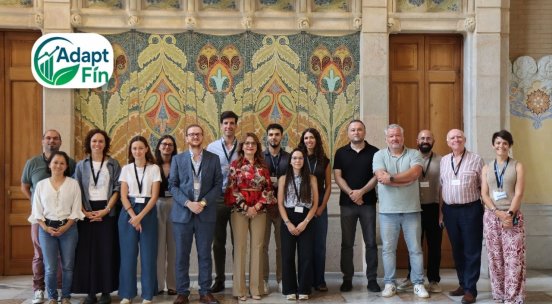
BRT’s newest Horizon Europe project ADAPT-FIN – Unlocking Private Sector Finance for Climate Adaptation officially began its work with a Kick-off Meeting held on 9–10 September 2026 in Barcelona, Spain.
Hosted at the historic Recinte Modernista de Sant Pau, the meeting brought together representatives from the ten partner organisations that make up the ADAPT-FIN consortium. The project is coordinated by the Czech University of Life Sciences Prague (CZU) under the leadership of BRT Director Assoc. Prof. Dr. Hynek Roubík, Project Coordinator.
Representing CZU at the meeting were BRT members Assoc. Prof. Dr. Hynek Roubík, Dr. Stacy Hammond, Dr. Viktoriia Chubur and Michaela Šrubařová, who joined partners for two days of discussions, presentations and collaborative workshops focused on establishing the foundations for the project’s work.
ADAPT-FIN responds to an important challenge: while climate adaptation can help reduce losses, protect assets and strengthen resilience, its wider economic, environmental and social benefits are not always sufficiently reflected in conventional financial assessments. This can make it difficult for valuable adaptation solutions to attract private investment.
Over the next 42 months, ADAPT-FIN will bring together expertise in climate adaptation, economics, finance, behavioural science, policy, communication and stakeholder engagement to develop and test new approaches for demonstrating the value of climate adaptation and supporting investment-ready solutions.
New Paper Published! Predictive Modeling of Bacterial Inactivation With Hydrogen Peroxide Over a Cobalt Ferrite Catalyst
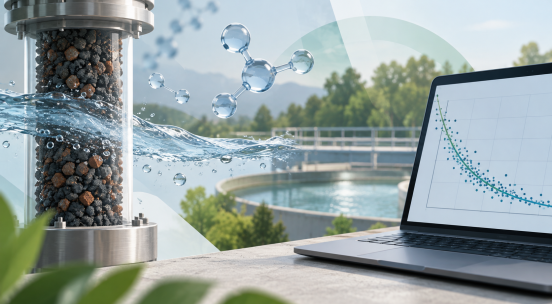
Researchers from the BioResources and Technology (BRT) division at the Faculty of Tropical AgriSciences, Czech University of Life Sciences Prague, BRT Director Assoc. Prof. Dr. Hynek Roubík and BRT Communications Manager Dr. Stacy Hammond recently co-authored an article in ChemPhysChem. The research explores how machine learning can improve the prediction and control of bacterial inactivation during advanced water treatment.
The article, “Predictive Modeling of Bacterial Inactivation With Hydrogen Peroxide Over a Cobalt Ferrite Catalyst,” was authored by Viktor Husak, Nazarii Danyliuk, Hynek Roubík, Olena Bobrova, Stacy Hammond, and Alexander Shyichuk.
Combining advanced oxidation with machine learning
The study investigated bacterial disinfection using hydrogen peroxide (H2O2) activated by a cobalt ferrite catalyst in a continuous-flow packed-bed reactor. Activation of hydrogen peroxide generates highly reactive hydroxyl radicals that effectively inactivate bacteria.
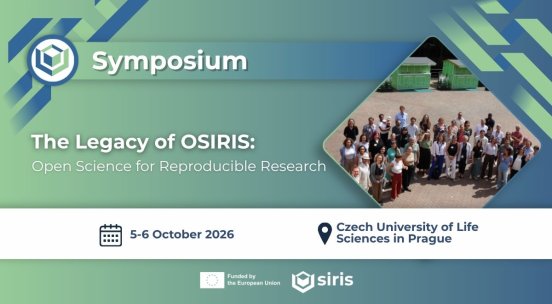
The Legacy of OSIRIS: Join Our Final Symposium in Prague
As the OSIRIS project approaches its conclusion, we are bringing together researchers, institutions and stakeholders from across the research ecosystem for the final symposium, “The Legacy of OSIRIS: Open Science for Reproducible Research,” taking place in Prague on 5–6 October 2026.
The symposium will mark one of the final major milestones of OSIRIS – Open Science to Increase Reproducibility in Science and will create a space to reflect on what the project has achieved, discuss how its results can be translated into practice, and explore how the OSIRIS legacy can continue to support more transparent, trustworthy and reproducible research beyond the project’s lifetime.
MCYR 2026 Blog Writing Competition “Your Research, Your Story”
Can you explain your research to someone outside your field? Can you turn scientific findings into a story that is engaging, relatable, and easy to understand?
At a scientific conference, research is communicated through structured scientific formats, abstracts, oral presentations, posters, data, and evidence. These formats are essential for sharing knowledge within the scientific community. But impactful science also needs another voice: one that can reach beyond experts and connect scientific discoveries with society.
At MCYR, we believe that young researchers should be able to communicate their science in both ways: with scientific rigour for academic audiences and with clarity and creativity for non-specialists and the wider public.
The MCYR 2026 Blog Writing Competition “Your Research, Your Story:” invites researchers presenting their work at the conference to take on this second communication challenge. Transform the same scientific contribution you are presenting at MCYR into an engaging blog story that people outside your field can understand, connect with, and remember.
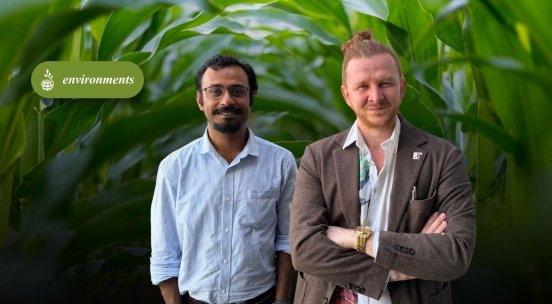
BRT Researchers Appointed Guest Editors for Special Issue on Organic Waste Valorization
BRT Director Assoc. Prof. Dr. Hynek Roubík and BRT postdoctoral researcher Dr. Sandipan Banerjee have been appointed as Guest Editors of a new Special Issue in Environments.
The Special Issue, titled “Organic Waste to Energy and Nutrients: Sustainable Technologies and Systems for Circular Agriculture,” focuses on technologies and approaches that transform agricultural and biodegradable organic residues into renewable energy, recycled nutrients and other valuable resources.
Large quantities of crop residues, livestock manure, food waste and agro-industrial residues are generated through agricultural intensification and urbanization. When poorly managed, these waste streams can contribute to greenhouse gas emissions, eutrophication and soil degradation, while also representing an important resource for more circular and sustainable agricultural systems.