
New Paper published! Biodegradation of Benzo[a]pyrene Using a Novel Gut Isolate Bhargavaea beijingensis BP14 from Perionyx excavatus
BRT Postdoctoral researcher Dr. Sandipan Banerjee from the Faculty of Tropical Agrisciences (FTZ) at the Czech University of Life Sciences Prague (CZU) recently published an article in the in Bulletin of Environmental Contamination and Toxicology.
The publication examines the ability of bacteria isolated from the gut of an earthworm to degrade Benzo(a)pyrene, a polycyclic aromatic hydrocarbon commonly abbreviated as BaP. Although the microbial breakdown of polycyclic aromatic hydrocarbons has been studied for decades, the biodegradation of BaP by gut-associated microorganisms has received comparatively limited attention. The study investigated Bhargavea beijingensis BP14, a bacterial strain isolated from the gut of the earthworm Perionyx excavatus.
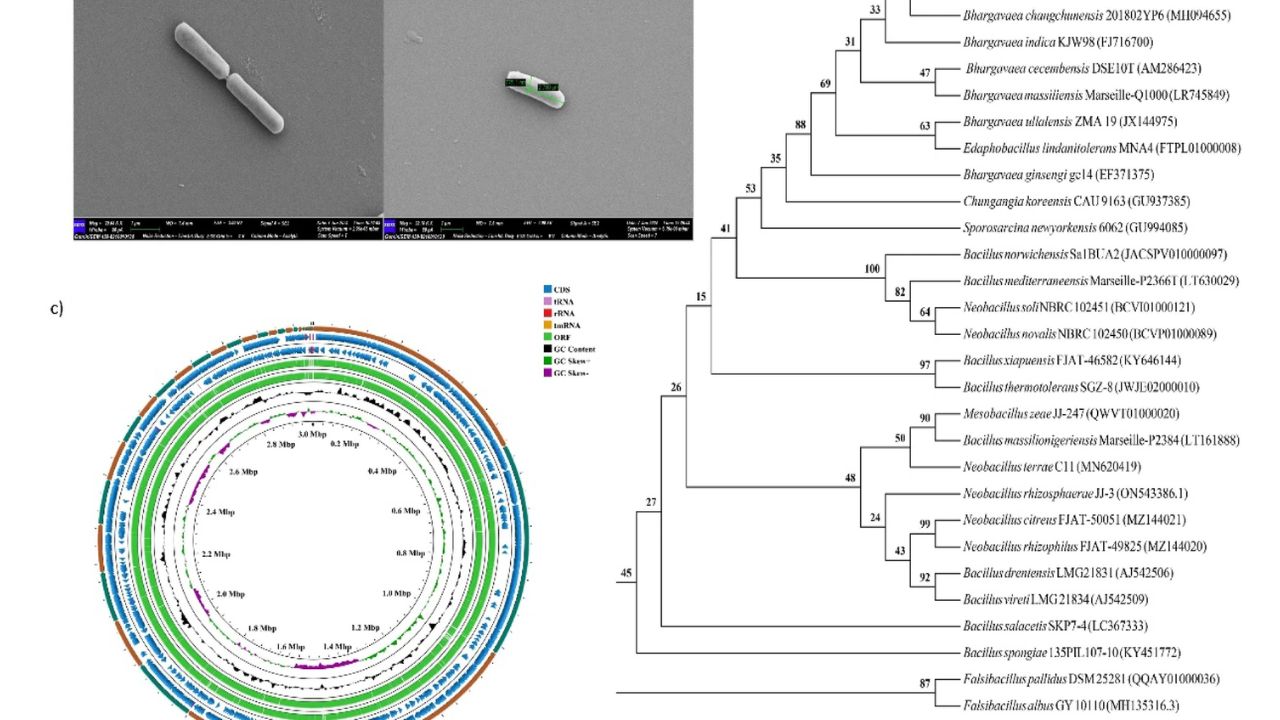
The findings showed that B. beijingensis BP14 was capable of degrading almost 65% of BaP within 14 days. To investigate the capabilities of the selected bacterial isolate, the researchers conducted whole-genome sequence analysis. This enabled them to predict genes, perform functional annotation, and identify coding sequences, tRNA and rRNA genes, and proteins potentially associated with BaP degradation.
The genome of B. beijingensis BP14 contained genes encoding catechol 2,3-dioxygenase, catechol 1,2-dioxygenase, and ring-cleavage dioxygenase. The presence of these genes demonstrated the strain’s potential to degrade hydrocarbons. The results indicated that B. beijingensis BP14 used a meta-cleavage pathway during BaP biodegradation. In this process, the enzyme catechol 2,3-dioxygenase contributed to the formation of phthalic acid as an intermediate compound.
Gas chromatography–mass spectrometry analysis identified dibutyl phthalate as the primary metabolite. Based on these findings, the study suggested that BaP biodegradation by B. beijingensis BP14 predominantly followed the phthalate pathway. The research represents the first report identifying the ability of B. beijingensis BP14, isolated from the gut of the earthworm P. excavatus, to degrade BaP.
Citation: Gupta N, Biswas R, Banerjee S, Koley A, Mukherjee R, Das N, Mandal NC, Balachandran S, Hoque RR (2026). Biodegradation of Benzo [a] pyrene Using a Novel Gut Isolate Bhargavaea beijingensis BP14 from Perionyx excavatus. Bulletin of Environmental Contamination and Toxicology. 116(3):54. https://doi.org/10.1007/s00128-026-04215-0
For more details on BRT activities, subscribe to our newsletter or follow us on social media for regular updates and highlights!